When to decide on an outpatient birth
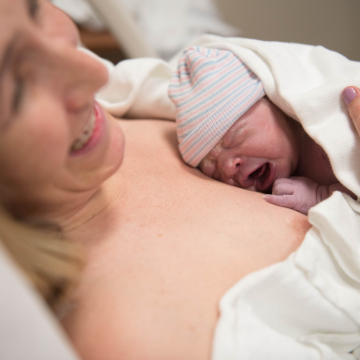
Outpatient childbirth is quite a controversial topic for us, but it is common abroad. Fortunately, the number of women choosing outpatient childbirth is growing in our country as well, and neither hospitals nor their pediatricians have a problem with it. So, what exactly is outpatient childbirth, why choose it, and what needs to be arranged after such a birth?
What is outpatient childbirth
Outpatient childbirth is when a woman leaves the hospital less than 72 hours after the baby is born. This could be just a couple of hours after delivery or the following day. In many countries, this is a common practice. After the birth, the mother goes home, and a community midwife visits her to check on both mother and baby, perform the necessary examinations, and allow the mother to rest in the comfort of her own home.
Why choose outpatient childbirth
There are several reasons for choosing outpatient childbirth. If both mother and baby are not in any life-threatening condition and the baby is not born prematurely with a birth weight under 2.5 kg, there is no reason not to go home earlier. Most mothers decide on outpatient birth because:
- they already have one or more children at home and want to be with their family as soon as possible;
- they have a child at home who is used to falling asleep with the mother or is still breastfeeding, and the mother wants to avoid separation due to the birth;
- they have had a negative experience with postpartum hospital stays, whether due to staff, food, separation from the baby, or pressure regarding breastfeeding and weighing the baby;
- the mother doesn’t like hospitals, feels uncomfortable there, and believes that the sooner she is home, the better she will bond with her baby;
- they like the idea of a home birth but either do not feel confident enough or do not have suitable conditions, so they prefer to give birth in a hospital and then return home.
What needs to be arranged after outpatient childbirth
If you choose outpatient childbirth, you should find out the conditions at your selected hospital and what examinations will be performed a few days after birth, or whether you need to arrange them elsewhere. These include:
- newborn jaundice test,
- heel blood sampling – metabolic screening (48–72 hours after birth),
- Eye examination (within 4 weeks of birth),
- Hearing check (within 1 month of birth),
- Hip check (within 7 days of birth),
- arranging medical care for the newborn within 24 hours of birth (a pediatrician should not refuse to take a baby younger than 72 hours; if this happens, contact your insurance company to arrange another pediatrician).
Who is outpatient childbirth not suitable for
In some cases, outpatient childbirth is not recommended, and the mother should stay in the hospital with the baby for at least 72 hours. This applies if:
- the mother has preeclampsia,
- the mother has diabetes,
- the pregnancy is high-risk,
- the baby is born prematurely (before 37+0 weeks) with a birth weight under 2,500 g,
- the baby shows obvious signs of pathology,
- the mother experienced significant blood loss,
- the baby was delivered by cesarean section.
The number of mothers choosing outpatient childbirth is increasing every year, and hospitals are becoming more willing to accommodate it. There are also more community midwives available to provide postpartum care at home, collect heel blood samples, and advise on the care of both the baby and the mother.
Enjoy your pregnancy, and if you are unsure about staying in the hospital for the recommended three days, keep the option of outpatient childbirth open. If nothing prevents it (even an induced birth is not an obstacle), you can decide on it even at the last moment after your baby is born.