How to Gently Put a Baby to Sleep with Respect: 7 Tips for Peaceful Falling Asleep in Your Arms or Beside You

Baby sleep isn’t a skill that a child should have to "learn on their own."
It is an evolving process — one in which a sense of security and closeness plays the leading role.
Over time, many parents discover that what works best is the most natural thing of all — arms, contact, and presence.
Whether you soothe your baby to sleep in your arms, a wrap, a carrier, or right next to you in bed, there are gentle ways to make the whole process calmer — for the baby and for you.
1. Overtiredness: when the baby is "past the limit"
One of the most common causes of difficult bedtimes isn't that the baby doesn't want to sleep — it's that they are already too tired.
At that moment, stress levels in the body rise, and falling asleep paradoxically becomes harder.
How do you recognize it?
- the baby is restless or "wired"
- they cry even though they are clearly exhausted
- they have short, interrupted sleep cycles
What helps?
- bringing the baby close (arms, wrap)
- reducing stimuli (light, noise)
- rhythmic movement (walking, swaying)
- monotonous sound (white noise, voice)
In contact sleep, it often holds true — the baby’s body calms down through yours.
2. Daytime naps "on you" are perfectly fine
Daytime sleep doesn't have to take place in a crib. For many babies, it won't.
It is completely okay if the baby sleeps in your arms, a wrap, or a stroller.
In fact — for many children, this is the most natural way to fall asleep and stay asleep for longer.
Tips for daytime sleep:
- utilize babywearing (wrap or carrier)
- let the gentle hum of the household run in the background
- don't strive for absolute silence
Daytime sleep isn't about "perfect conditions," but about well-being.
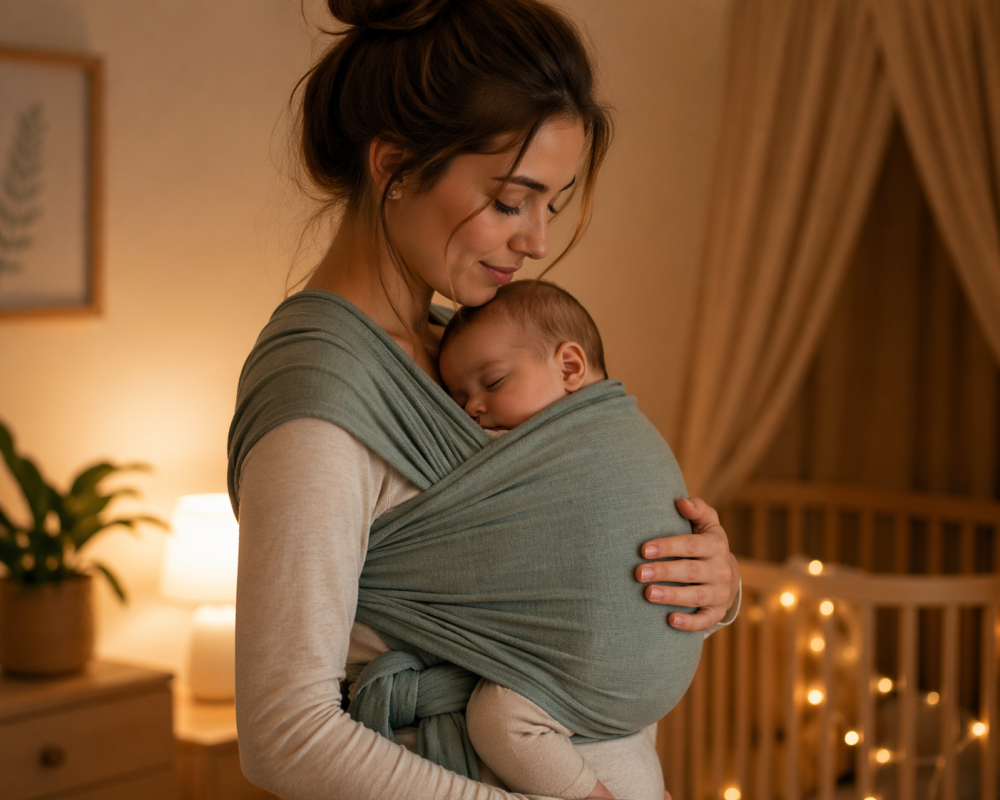
3. Being held is not a bad habit. It is a need.
You may have heard: "Don't get them used to being held." But for a baby, contact is a basic need — just like food or sleep.
Falling asleep in your arms:
- regulates the nervous system
- reduces stress
- helps them fall asleep faster and more peacefully
And importantly — the baby isn't forming a "bad habit," but building trust.
4. Babywearing as a secret superpower
A wrap or carrier can be a lifesaver — especially on days when nothing else works.
The combination of contact, movement, warmth, and rhythm is extremely soothing for a baby.
When babywearing helps the most:
- during overtiredness
- during evening restlessness
- when the baby doesn't want to be put down
Plus, it gives you free hands — which is more useful than it might seem
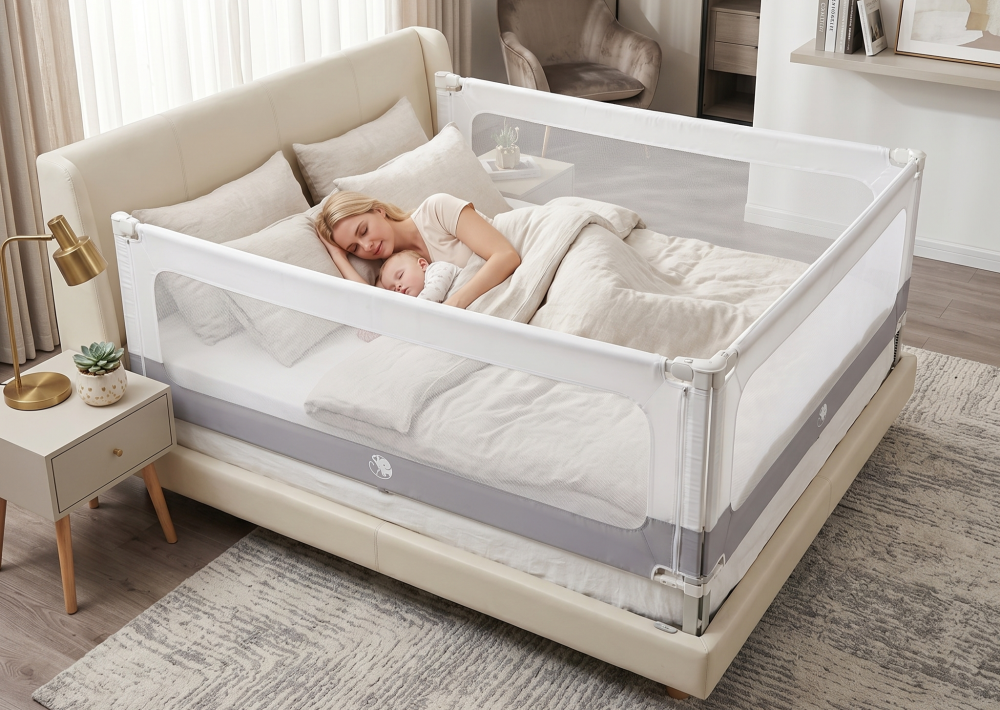
5. Co-sleeping: closeness even at night
Sleeping next to your baby (co-sleeping) is the most functional solution for many families.
The baby:
- feels your proximity
- calms down more easily
- often sleeps longer
And you:
- don't have to keep getting up
- can react faster
- have a more restful night
A safe environment is key:
- a firm mattress
- minimal items in the bed
- sufficient space
For extra security, you can use bed rails from Monkey Mum, which help create a safe space even in a large bed — especially once the baby starts moving more.
6. Evening ritual: a signal that calm is coming
Babies love repetition.
You don't need a complex regime — a simple, consistent sequence is enough:
- dimming the lights
- a slower pace
- bath or changing clothes
- cuddling / nursing / rocking
It’s not about how you put them to sleep, but that it happens similarly every night
7. Little things that make a big difference
Certain tools can beautifully support contact sleep:
- White noise - Mimics the sounds of the womb → calms and extends sleep
- Swaddling (for small babies) - Helps reduce the startle reflex
- Your presence - The most powerful "tool" of all
Summary: A baby doesn't need to learn to sleep without you
You might sometimes feel that they "should already be sleeping on their own." But the truth is different. Babies learn to sleep gradually — through closeness, not separation.
Contact-based and gentle sleep approach:
- is not spoiling them
- is not a step backward
- is an investment in peace (now and for the future)
And over time? The child won't need that closeness quite as much. But right now, they need it a lot!
 Special Offer
-58%
Special Offer
-58%